Hidden in the bustling heart of one of China’s most ancient capitals lies a temple so unique that it challenges everything you know about traditional Buddhist architecture. Welcome to Yunju Temple, also known as Xi Wutai (Western Five Terraces), a sacred sanctuary that has quietly preserved over 1,000 years of history amid the urban landscape of Xi’an.
Why Yunju Temple Stands Apart
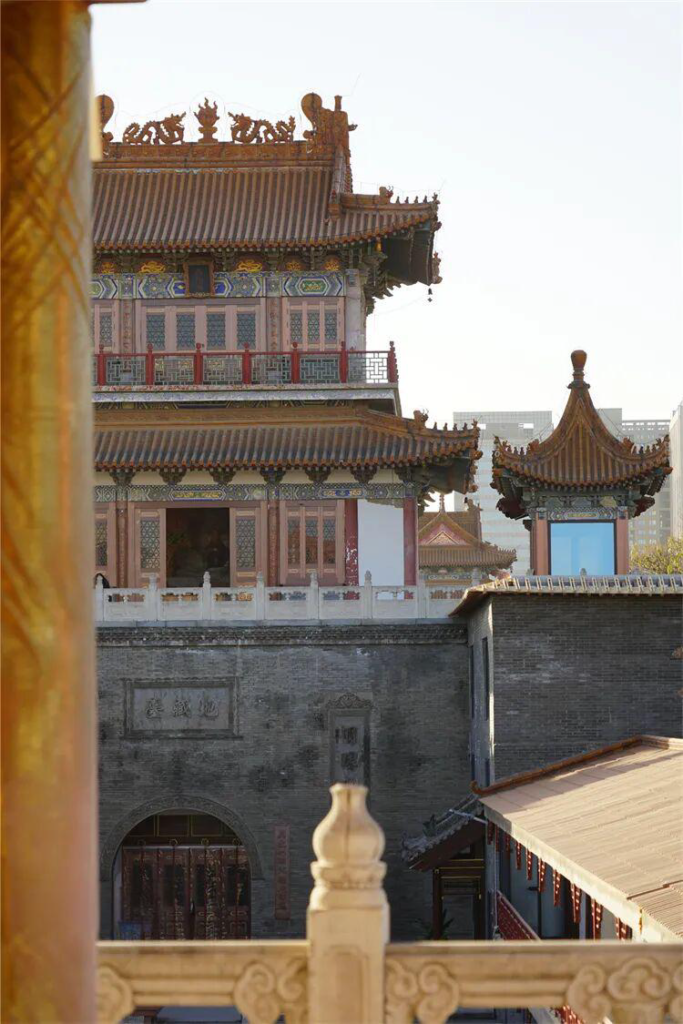
In a city famous for its perfectly symmetrical, grid-like layout, and where most ancient temples follow strict bilateral symmetry in their architectural design, Yunju Temple is a breathtaking exception. Instead of sprawling horizontally across the ground, this temple uniquely “rises upon elevated platforms,” creating an extraordinary vertical narrative that distinguishes it from every other temple in Xi’an.
A Glimpse into History
For centuries, Yunju Temple remained largely unknown to the outside world, nearly forgotten despite its royal significance. Originally constructed as an imperial temple closed to the public, visitors were only welcomed on the first and fifteenth days of each lunar month. It wasn’t until recently that the temple officially opened its doors to all visitors, revealing one of Xi’an’s most spectacular architectural secrets hidden beneath the city’s bustling commercial district.
The Architectural Marvel: Understanding Xi Wutai
As you enter the temple grounds, your first impression will be one of wonder. Rather than following the conventional horizontal layout of other temples in Xi’an, Yunju Temple features three main elevated platforms—Lingying Terrace, Wenshu Terrace, and Dizang Terrace. Visitors traverse this sacred space by ascending a unique sequence: from the Mountain Gate, through the Heavenly Kings Hall, then upward through the successive terraces to the magnificent Daxiongbaodian (Great Treasure Hall), finally reaching the Reclining Buddha Hall.
The entire complex faces east and sits west, with halls and structures rising gracefully from each elevated platform, creating an impressive ensemble of buildings that seems to defy the laws of horizontal Buddhist temple design. The architectural arrangement is nothing short of spectacular—each building positioned with careful precision, forming a grand complex that captures the imagination.Unveiling the Mystery: The True Origin Story
Local legend tells of Emperor Taizong of the Tang Dynasty commissioning this temple to allow his mother to practice Buddhist devotion more conveniently. Many believe it was modeled after the famous Nan Wutai (South Five Peaks) sacred site in the Qinling Mountains, hence the name Xi Wutai. While this story has charm, the real history is equally fascinating.
According to stone inscriptions preserved within the temple itself, the site’s true origin lies in its geographical position. The location originally formed the southern wall of the palace grounds of Daxingcheng (the capital of the Sui Dynasty) and Chang’an (the Tang Dynasty capital). Following the collapse of the palace walls during the Song Dynasty, five natural earthen terraces formed among the ruins. Resourceful builders later recognized this unique topography and constructed the temple upon these naturally formed platforms—and thus Xi Wutai was born. While originally consisting of five terraces, only three remain today, yet their presence transforms this site into an invaluable archaeological resource for understanding the palace architecture of the Sui and Tang dynasties. It is now designated as a national-level cultural heritage site.
The Serenity Within
Despite its location in bustling Hui Muslim Street and near the lively Saji Bridge commercial area, the temple interior maintains remarkable tranquility. Upon crossing the threshold, the urban noise fades away, and visitors find their spirits quieting in harmony with the peaceful atmosphere.
Visit during winter, and you’ll discover another layer of beauty: golden ginkgo trees adorn the temple grounds, their amber-colored leaves creating a stunning backdrop against the aged temple eaves. Time seems to pause in this serene setting, where the simple elegance of nature and ancient architecture create a healing sanctuary for weary souls.
Planning Your Visit
Location: Saji Bridge (Saji Qiao), Lianhu District, Xi’an
Admission: Free
How to Get There: Take Metro Line 1 and exit at Saji Bridge Station. The temple is just a few minutes’ walk away.
When to Visit: The front section of the temple (from the Mountain Gate to Wenshu Terrace) is now open year-round. The rear sections remain open only on the first and fifteenth days of the lunar month. Winter, particularly when ginkgo trees turn golden, offers the most photogenic experience.
Extended Exploration: Since Yunju Temple is conveniently located near other attractions such as Guangren Temple and Lianhu Park, it’s easy to combine this visit with other sightseeing for a fuller experience of Xi’an’s spiritual landscape.
A Must-See for Travelers
If you find yourself with time to spare in Xi’an, Yunju Temple deserves a place on your itinerary. This hidden gem, with its unique architecture and profound historical significance, offers a different perspective on Buddhist heritage and urban cultural preservation. Here, in this contemplative space, you may find the healing power of ancient wisdom and the tranquil beauty that centuries-old temples are meant to provide.