Recently, a cutting-edge DNA study on horse bones unearthed from the tomb of Emperor Wen of the Western Han Dynasty has revealed the mystery of the top imperial horses of the Han Dynasty.
Research has revealed that the two magnificent steeds interred alongside Emperor Wen of Han’s tomb possessed distinct bloodlines – one “overseas” and the other “indigenous” – providing robust scientific evidence of exchanges between the Western Han dynasty and the Western Regions, indeed Central Asia, over two millennia ago.
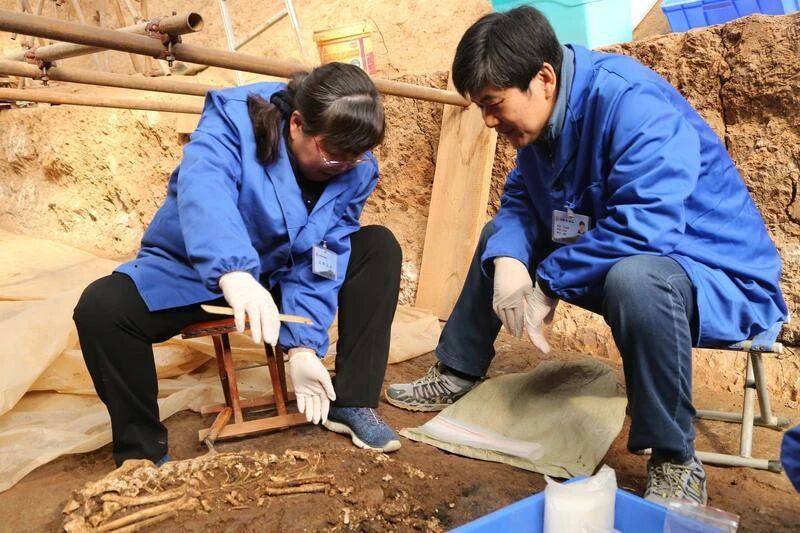
The focus of this research is the equine skeletal remains unearthed from two outer burial pits at the southwestern corner of the Ba Ling tomb. Through scientific ancient DNA extraction and analysis, researchers successfully decoded their complete mitochondrial genome sequences.
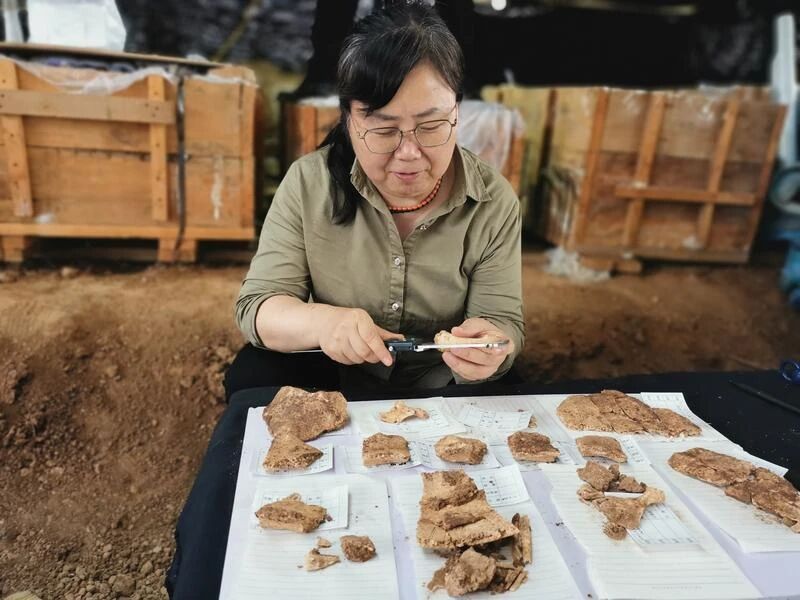
Extracting uncontaminated DNA from bones over two millennia old is an exceptionally challenging undertaking. Researchers first performed a meticulous ‘archaeological surgery,’ carefully grinding away potentially contaminated surface layers of the bones. These were then repeatedly washed with disinfectant solutions. Within a super-clean workbench, specialised reagent kits were employed to capture and amplify minute traces of ancient DNA, culminating in high-throughput sequencing. The entire process was conducted under strictly controlled, contamination-free conditions to ensure the authenticity and reliability of the analytical results.
Professor Cai Dawei, an ancient DNA specialist at Jilin University, explained that one horse originated from the Western Regions while the other was native to East Asia. Both burial horses were male, but crucially, their maternal lineages differed entirely. One horse belonged to haplogroup G, whose genetic profile exhibits close affinity with ancient Central Asian and even modern Arabian horses. This indicates it was a descendant of the ‘Western Heavenly Horse’ originating from Central Asia. The other horse belonged to haplogroup Q, a lineage widely prevalent in East Asia, suggesting its maternal lineage was indigenous or East Asian in origin.
Professor Hu Songmei, Distinguished Professor at Shandong University and Deputy Director of the Zoological Archaeology Committee of the Chinese Archaeological Society, stated that this discovery holds significant importance. It provides the first genetic evidence confirming that during the reign of Emperor Wen of the Western Han Dynasty, the imperial court in Shaanxi – the nation’s political centre – simultaneously kept superior horses of both Central Asian and indigenous origin.
Historical records indicate Emperor Wen himself was a fervent enthusiast of equestrian archery and placed great emphasis on military preparedness. The imperial steeds interred as burial offerings must have been exceptional specimens selected from countless others. The ‘Central Asian lineage’ identified among the Baoling horses was most likely introduced to the Han court through early East-West exchanges, either as precious gifts or trade commodities.
This predates Zhang Qian’s formal opening of the Western Regions, providing novel molecular archaeological evidence for studying cultural, military, and trade exchanges between the early Han Dynasty and the Eurasian continent.
Furthermore, both horses being male confirms that ancient rituals and burial practices favoured robust stallions for ceremonial processions or riding purposes.
Moreover, these two steeds from Baling tomb are not merely imperial burial offerings but living fossils of East-West civilisational exchange over two millennia ago. Their silent genetic legacy narrates an early tale of global connectivity, cultural exchange, and integration.